What Is an ROV? 8 Common Questions About Underwater Robots
Learn what is an ROV, its functioning, main types, applications, operational depth and key equipment. Discover PELAGIX underwater vehicle solutions.
2026/11/09
Reading volume: 3
News Details
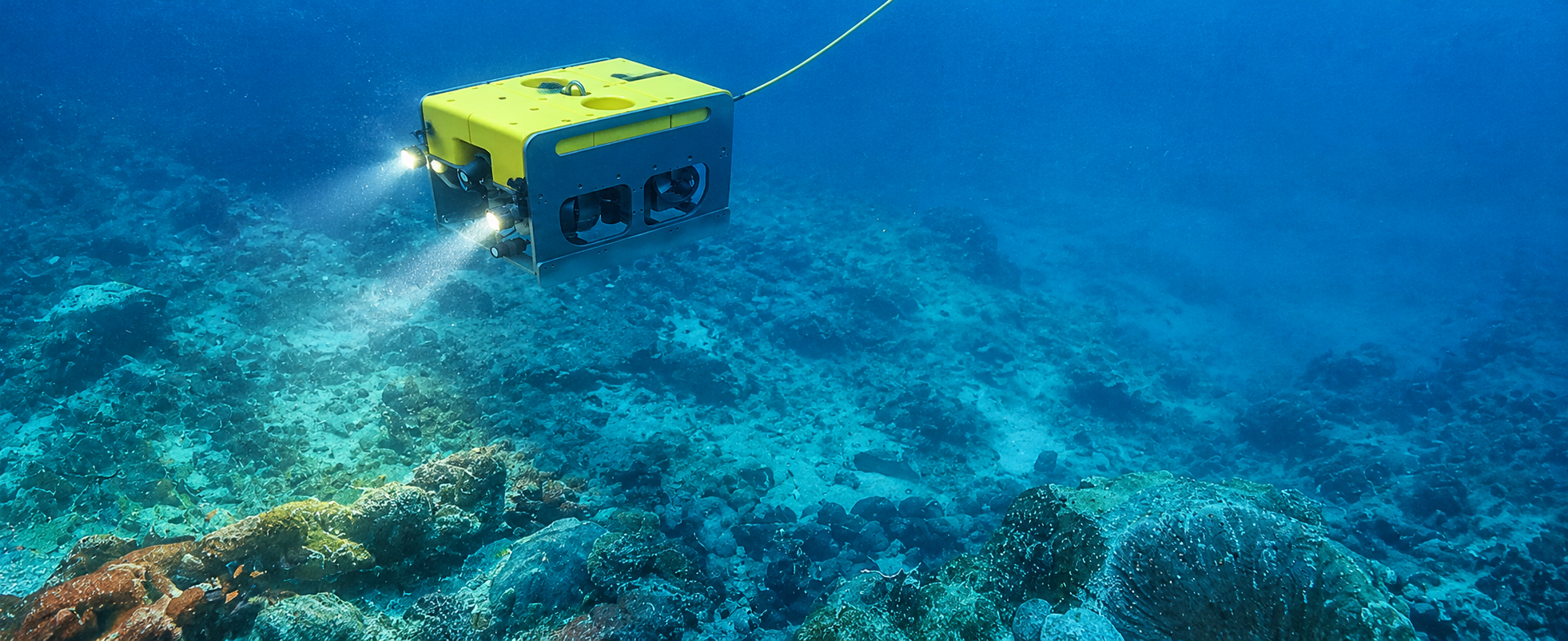
An ROV, or Remotely Operated Vehicle, is an underwater robot controlled by an operator from the surface. It uses cameras, sensors, and other tools to explore underwater areas and complete different tasks.
Today, ROVs are widely used in marine research, offshore energy, pipeline inspection, and underwater engineering. They help people work in deep or dangerous areas without sending divers underwater.
But how do ROVs work? What can they do? And how do you choose the right model?
In this guide, we answer eight common questions about ROVs and explain how PELAGIX underwater vehicles support different marine projects.
8 Common Questions About ROVs
1. How Does an ROV Work?
An ROV is connected to a surface control system through a tether. The operator uses a computer, control software, and a controller to move the vehicle underwater.
Most ROV systems include three main parts:
-
ROV body: Holds the motors, cameras, sensors, and other equipment.
-
Tether: Connects the underwater vehicle to the surface system and carries power or data.
-
Control system: Allows the operator to control movement and view live underwater images.
The operator can change direction, adjust depth, and control cameras while watching the underwater environment in real time.
2. What Are the Main Types of ROVs?
ROVs come in different sizes and designs. They are usually grouped by their size, power, and working tasks.
Observation ROVs
These are small vehicles used for underwater viewing and basic inspection. They often carry cameras and lights.
Inspection ROVs
These vehicles support professional inspection and data collection. They can carry cameras, sonar, and navigation sensors.
Work-Class ROVs
These are larger and more powerful vehicles. They can carry heavy tools and robotic arms for complex underwater work.
The right type depends on the working depth, payload, water conditions, and project needs.
3. What Industries Use ROVs?
ROVs are useful in many industries because they can work in areas that are difficult or unsafe for divers.
Common applications include:
Offshore Oil and Gas
ROVs inspect subsea pipelines, offshore platforms, and underwater equipment. They also help with maintenance tasks.
Marine Research
Researchers use ROVs to study marine life, collect samples, and record underwater images.
Search and Rescue
ROVs help teams search for missing objects and inspect underwater areas. Cameras and sonar can make searches faster and safer.
Underwater Construction
ROVs inspect dams, bridges, ports, and other underwater structures. They can also support construction and repair work.
Environmental Monitoring
ROVs collect water data and record changes in underwater environments. This helps researchers study pollution and marine ecosystems.
4. How Deep Can an ROV Go?
The maximum depth depends on the ROV model and its design.
Small observation ROVs often work in shallow water. Professional inspection and work-class vehicles can reach greater depths.
For example, PELAGIX offers two ROV models for underwater operations:
| Model | Maximum Depth | Payload Capacity |
| ROV-050 | 300 m | 15 kg |
| ROV-100 | 300 m | 30 kg |
The ROV-050 is designed for subsea inspection and environmental monitoring. The ROV-100 offers a larger payload for more demanding tasks.
For deeper missions, PELAGIX also provides AUV solutions, including the AUV-324 with a 2,000 m depth rating and the AUV-600 with a 6,000 m depth rating.
5. What Tasks Can an ROV Perform Underwater?
ROVs can perform many tasks based on their equipment and design.
Common tasks include:
-
Visual inspection: Record underwater images and videos.
-
Pipeline inspection: Check pipeline surfaces and surrounding areas.
-
Search and recovery: Locate lost objects underwater.
-
Data collection: Collect water and environmental data.
-
Seabed surveys: Observe underwater terrain and structures.
-
Equipment checks: Inspect offshore and marine equipment.
-
Sample collection: Support marine research with suitable tools.
With the right sensors and tools, an ROV can handle more complex underwater tasks.
6. What Is the Difference Between an ROV and an AUV?
ROVs and AUVs are both underwater robots, but they work in different ways.
| Feature | ROV | AUV |
|---|---|---|
| Full Name | Remotely Operated Vehicle | Autonomous Underwater Vehicle |
| Control | Operated from the surface | Runs with a planned mission |
| Connection | Usually uses a tether | Usually works without a tether |
| Main Use | Inspection and close-up work | Mapping and large-area surveys |
| Operation | Real-time control | Autonomous navigation |
An ROV is a good choice when operators need direct control and live video. An AUV is better for planned surveys over large underwater areas.
PELAGIX develops both ROV and AUV systems for marine research, underwater inspection, and engineering projects.
7. How Are ROVs Controlled?
ROVs are controlled through a surface control system.
The operator uses a controller and software to manage the vehicle's movement. The system also displays live camera images and sensor data.
Common control functions include:
-
Moving forward and backward
-
Turning left and right
-
Moving up and down
-
Adjusting speed and depth
-
Controlling lights and cameras
Some professional ROVs also have auto-depth and auto-heading functions. These features help the vehicle maintain its depth and direction during inspection.
For example, both the PELAGIX ROV-050 and ROV-100 feature six-thruster layouts and automatic depth and heading functions.
8. What Equipment Can Be Attached to an ROV?
Different underwater tasks need different equipment. ROVs can carry several types of tools and sensors.
Common options include:
HD Cameras: Capture clear underwater images and videos.
LED Lights: Improve visibility in dark underwater areas.
Imaging Sonar: Help detect objects when water visibility is poor.
Robotic Arms: Allow the vehicle to handle objects and perform simple intervention tasks.
Navigation Sensors: Help track vehicle movement and position.
Environmental Sensors: Collect data such as water temperature and other marine conditions.
When choosing equipment, check the ROV's payload capacity, power supply, and connection options.
Choose the Right Underwater Vehicle with PELAGIX
ROVs make underwater inspection and research easier and safer. They can support many tasks, from checking pipelines to collecting marine data.
Choosing the right vehicle depends on your working depth, mission goals, payload, and operating conditions.
PELAGIX, developed by Sanya Poseidon Ocean Technology Co., Ltd., focuses on AUV and ROV research, manufacturing, and technical services.
Its product range includes:
-
ROV-050: A 300 m inspection ROV with 15 kg payload capacity.
-
ROV-100: A 300 m ROV with 30 kg payload capacity.
-
AUV-324: A medium AUV designed for surveys and seabed mapping, with a 2,000 m depth rating.
-
AUV-600: A large AUV designed for deep-sea exploration, with a 6,000 m depth rating.
Whether you need an ROV for subsea inspection or an AUV for deep-sea surveys, PELAGIX can help you explore suitable underwater vehicle solutions.
Contact PELAGIX to discuss your project and find the right equipment for your next underwater mission.
Share to:


