Pelagix Multi-AUV Cooperative Detection: Swarm Survey Capability Verified with Eight-Vehicle Formations
Pelagix's Multi-AUV Cooperative Detection System integrates target recognition powered by machine learning, data-driven path replanning, and swarm navigation and communications. It was tested with eight heterogeneous vehicles maintaining line and triangular formations with a precision of 30 m ± 5 m, and the system can detect seabed targets of 50 cm with a recognition accuracy exceeding 85% across the AUV-600, AUV-533, and AUV-900 platforms.
2026/11/16
Reading volume: 3
News Details
Pelagix has built its multi-AUV cooperative detection capability around a simple idea: instead of sending one vehicle to cover a large survey area, several coordinated vehicles share the work as a single system. The Pelagix Multi-AUV Cooperative Detection System combines machine-learning-based underwater target recognition, data-driven decision making with path replanning, and swarm navigation and communications, so that a group of autonomous underwater vehicles can search, detect and report together in wide-area, changing sea conditions. This article summarizes how the system works, what has been verified in multi-vehicle trials, and which Pelagix platforms support cooperative missions.
Three Core Technologies Behind the System
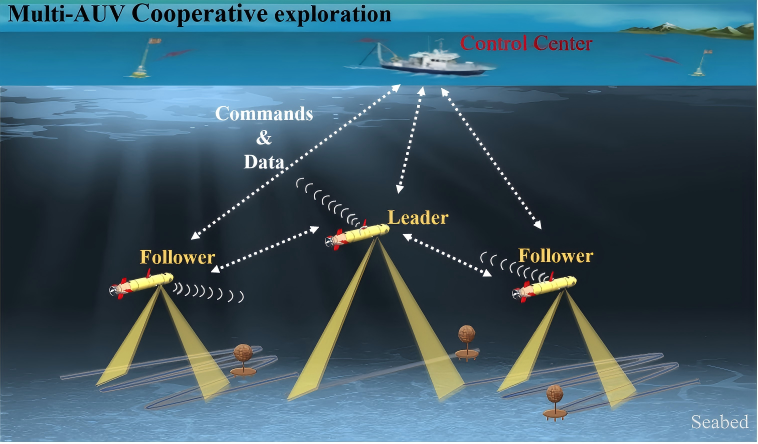
The cooperative detection stack rests on three technologies that operate as one loop. First, machine-learning-based target recognition classifies sonar and optical data onboard, so the vehicles report detected objects rather than raw imagery alone. Second, data-driven intelligent decision making and path replanning let the group adjust its coverage plan when conditions change or when a contact warrants closer inspection. Third, swarm cooperative navigation and communication keep every vehicle aware of the group's position and progress even when underwater links are constrained. Together, these functions turn a set of individual AUVs into a cooperative survey asset for wide-area missions such as seabed mapping, environmental monitoring and object search.
Formation Control, Verified with Eight Heterogeneous Vehicles
Formation control is what makes a multi-AUV system practical rather than experimental. In validation trials, a large vehicle platform carried and coordinated a formation of eight heterogeneous underwater vehicles, the group held line and triangle formations, and it switched between formations dynamically as the mission required. Formation control precision reached 30 m ± 5 m, a margin tight enough for wide-area cooperative search where each vehicle covers its own lane but the group must stay synchronized.
Detection Performance Confirmed in Joint Trials
Cooperative detection results from joint multi-vehicle search trials define what buyers can reasonably expect. The system has completed multi-vehicle cooperative search validation with precise static target detection: it identified 50 cm sphere targets on the seabed and tubular targets on the bottom, with online target recognition accuracy above 85% and a false identification rate below 10%. For moving objects, the system demonstrated online recognition and real-time tracking of underwater moving targets, the capability that underpins wide-area cooperative deployment against contacts of interest. All figures describe technology verification; mission performance depends on sonar configuration, water conditions and survey planning.
Staying Connected When Underwater Links Are Weak
Underwater communication is the hardest constraint in multi-vehicle work, and the system is designed around it. Pelagix swarm-capable platforms use a multi-channel, multi-link network mode that automatically switches between UHF, WiFi, 4G and underwater acoustic communication according to the operating scenario, so the fleet keeps a workable link above water, at the surface and below it. An integrated ground control station gives operators a single point of mission planning, monitoring and data review for the whole group, and every vehicle runs in-house Pelagix control software with a visual mission interface and support for secondary development.
Platforms That Fly in Formation
The cooperative system runs on Pelagix's large AUV line, and each hull brings a different strength to a group mission:
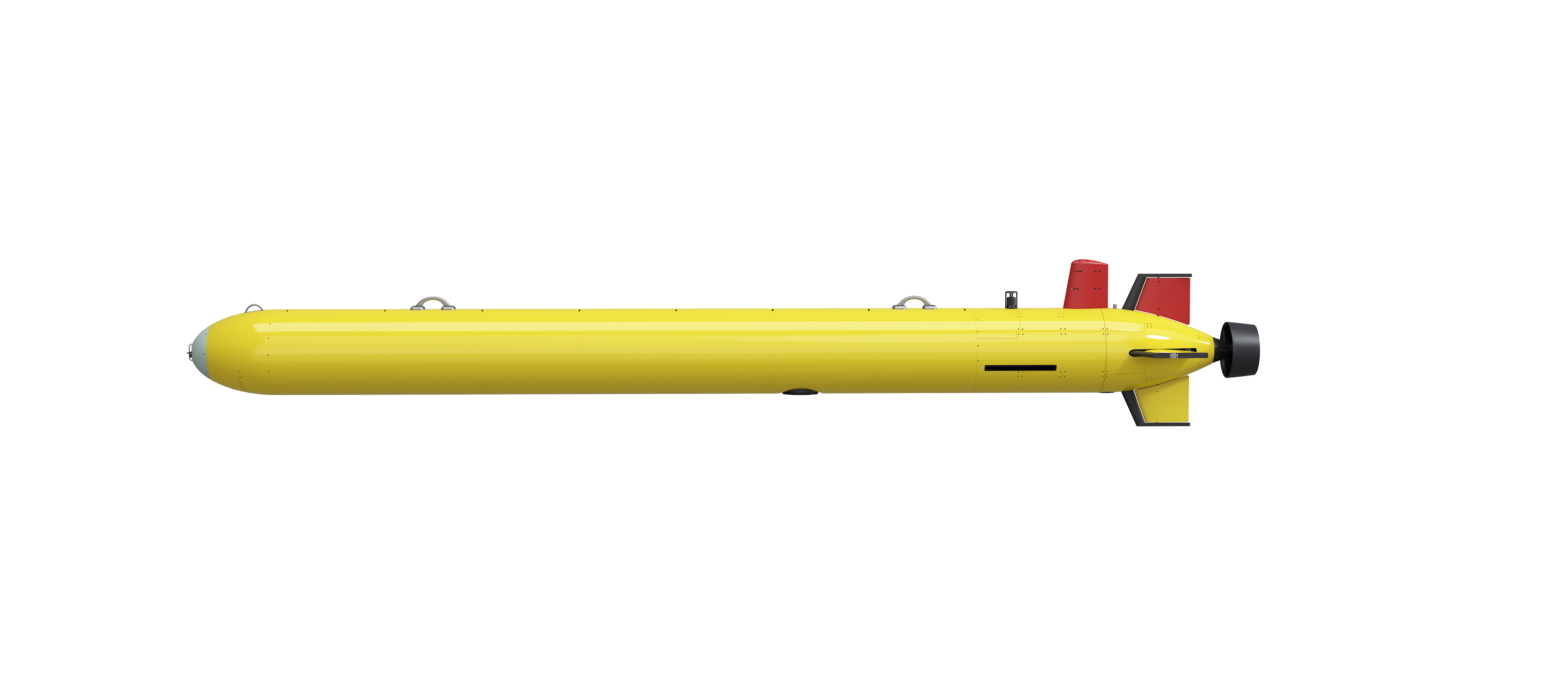
- AUV-600: the swarm-focused model, with intelligent swarm functions including formation grouping, formation switching, cooperative detection and target search, plus the multi-channel communication network described above. A 600 mm × 6 m hull, 1200 kg, depth options of 1000 m, 3000 m and 6000 m, 24 h endurance at 3 knots and INS+DVL+GNSS+USBL navigation with 0.5% accuracy.
- AUV-533: configured for multi-AUV swarm survey duty, with ≥90 h endurance (up to 180 h / 1000 km with custom batteries), 0.3% navigation accuracy with SLAM, and polar-water capability for survey groups working at high latitudes.
- AUV-900: the flagship hull that supports multi-vehicle cooperative detection with a 250 kg payload bay for heavy survey sensors, ≥90 h endurance (up to 270 h / 1500 km custom) and 0.2% navigation accuracy.
For long-duration group missions, the Pelagix underwater docking station extends the picture: acoustic-optical guidance brings vehicles in with a docking success rate above 90% in under 30 minutes, non-contact underwater charging operates at no less than 80% efficiency, and data transfer runs at 2 Mbps or better, allowing vehicles to recharge and offload data without being recovered.
Where Cooperative Detection Fits
Multi-AUV cooperative operations are configured for civil survey and research missions, including:
- Wide-area bathymetric and seabed surveys: parallel lane coverage by several vehicles that compresses survey timelines for chart-grade deliverables.
- Environmental monitoring: simultaneous multi-point sampling across eddies, water columns or survey grids, an application where cooperative groups outperform single-vehicle transects.
- Search and recovery support: systematic, overlapping sonar coverage for locating submerged objects in conditions that are unsafe for divers.
- Marine engineering surveys: route and site surveys where formation coverage shortens weather-window-sensitive operations.
- Scientific research: coordinated observation of dynamic ocean features such as mesoscale eddies, supported by Pelagix software tools.
Availability and Configuration Support
Pelagix supplies the Multi-AUV Cooperative Detection System together with its AUV platforms, launch-and-recovery systems and the integrated ground control station, with OEM, ODM and system-integration support covering sensor integration, formation and mission software configuration, and custom endurance options. The AUV-600 product page details the swarm-capable platform, and the full Pelagix range of underwater vehicles, thrusters and sensors is listed at pelagix-tech.com, where buyers can request configuration support for a specific cooperative survey programme.
Share to:


