Pelagix AUVs: 6000m Deep-Sea Bathymetric Survey
The large AUV series from PelagiX features three 6000 m-capable platforms for deep-water operations: the AUV-533, AUV-600 and AUV-900, with endurance ranging from 24 to 270 hours, modular payloads up to 250 kg, and INS+DVL+GNSS+USBL navigation with SLAM for bathymetric survey, oceanographic research and subsea resource exploration.
2026/11/13
Reading volume: 0
News Details
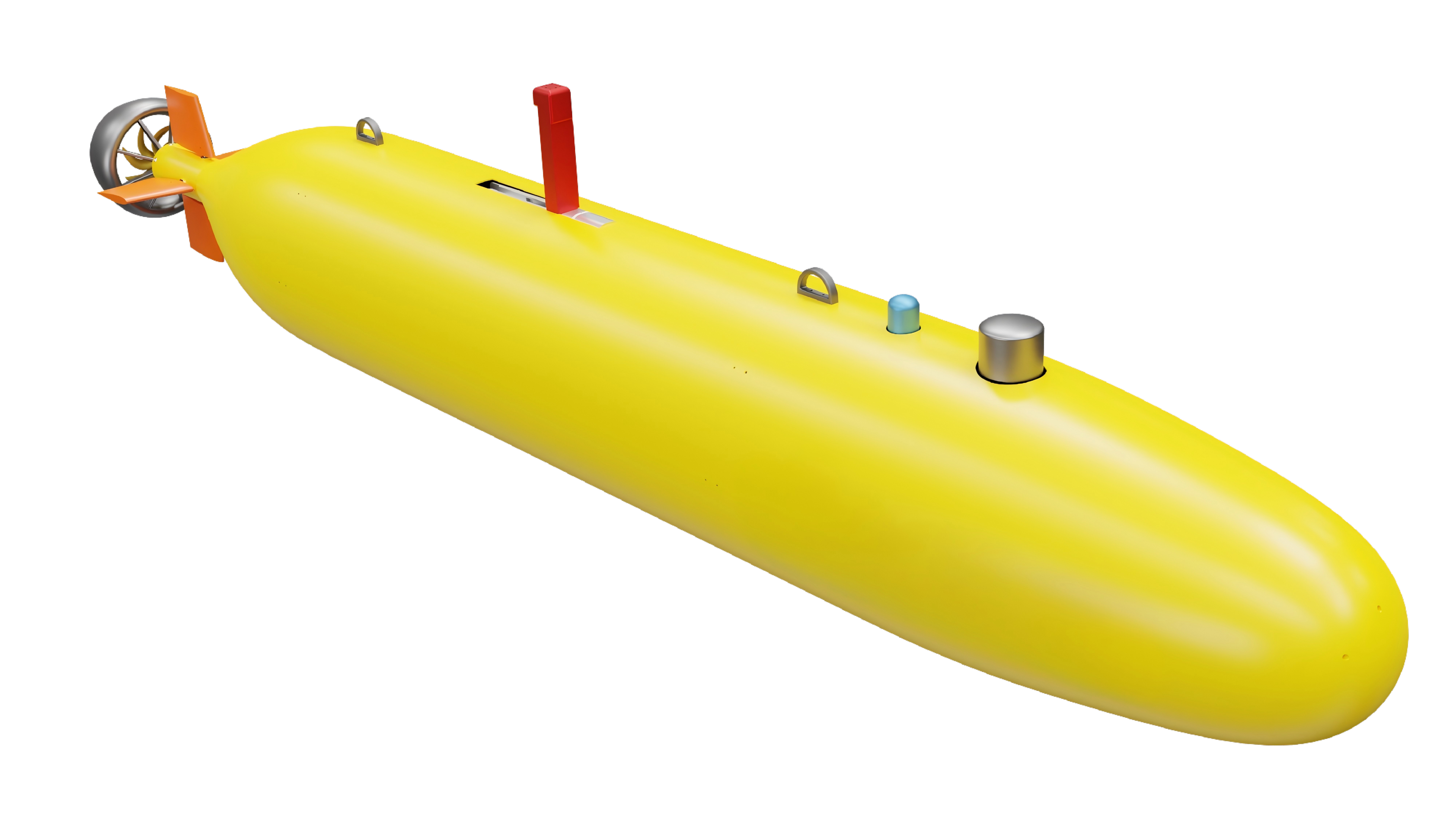
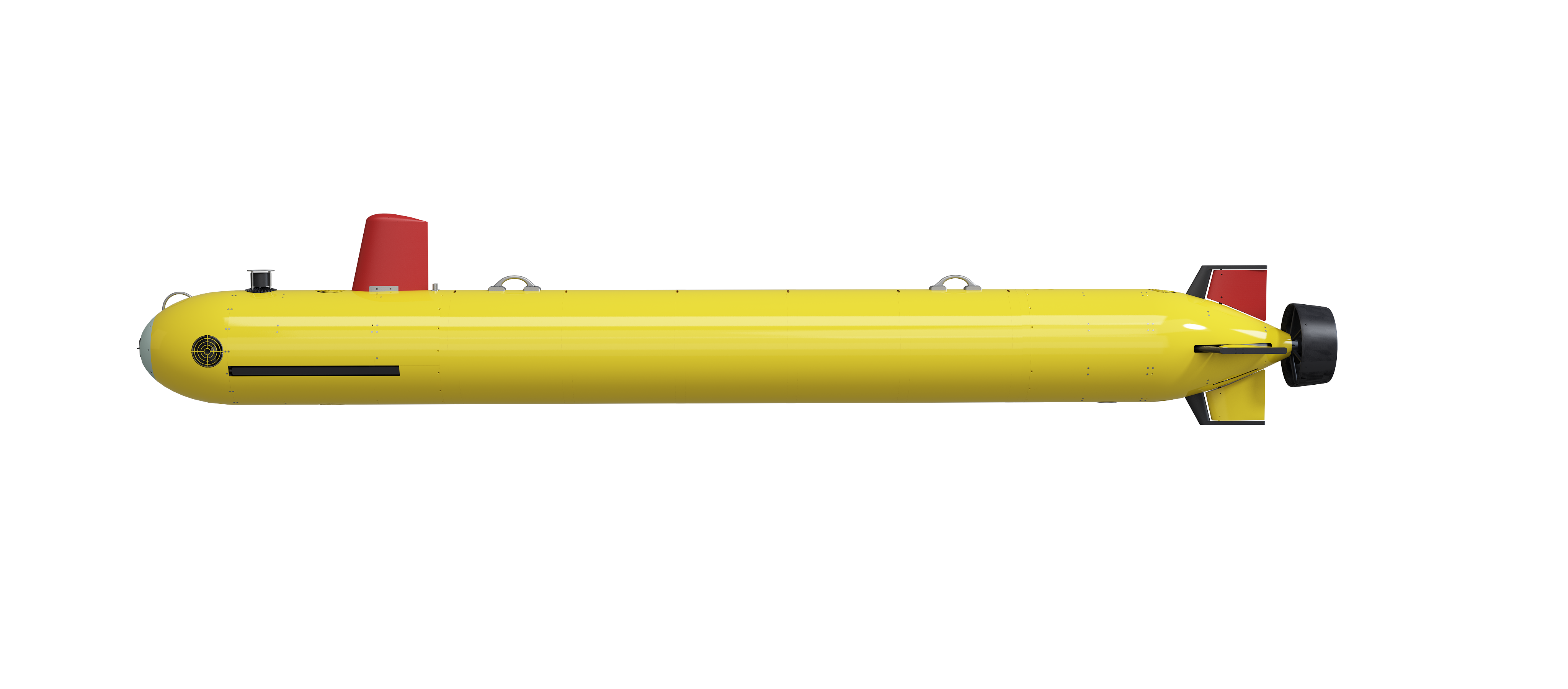
Pelagix's line of large autonomous underwater vehicles brings three 6000 m-capable platforms to deep-water survey work: the AUV-533, the AUV-600 and the AUV-900. Each is a long-range, modular deep-sea autonomous underwater vehicle designed for bathymetric mapping, physical oceanography surveys and subsea resource exploration, with titanium pressure housings, dedicated launch-and-recovery systems and SLAM-aided navigation. This article summarizes how the three hulls differ, what their endurance and navigation figures mean in practice, and which survey missions each platform is built for.
Three Hulls, One 6000 m Mission Envelope
The series spans two size classes. The AUV-533 and AUV-600 share a 1200 kg displacement: the AUV-533 measures 533 mm in diameter by 5 m long and carries a 150 kg payload, while the AUV-600 is 600 mm by 6 m. The AUV-900 is the largest hull at 900 mm by 6 m and 2000 kg, with a 250 kg payload bay for heavy survey suites. Depth ratings are configurable rather than fixed — the AUV-533 offers 2000 m and 6000 m hulls, the AUV-600 offers 1000 m, 3000 m and 6000 m, and the AUV-900 offers 3000 m, 4500 m and 6000 m — so buyers can match hull cost to the water depth the mission actually requires.
| Specification | AUV-533 | AUV-600 | AUV-900 |
|---|---|---|---|
| Dimensions (Ø × length) | 533 mm × 5 m | 600 mm × 6 m | 900 mm × 6 m |
| Weight (standard) | 1200 kg | 1200 kg | 2000 kg |
| Max payload | 150 kg | Modular bay | 250 kg |
| Depth options | 2000 m / 6000 m | 1000 m / 3000 m / 6000 m | 3000 m / 4500 m / 6000 m |
| Endurance (standard, 3 knots) | ≥90 h (up to 180 h / 1000 km custom) | 24 h | ≥90 h (up to 270 h / 1500 km custom) |
| Navigation accuracy | 0.3% of range + SLAM | 0.5% of range | 0.2% of range + SLAM |
All three vehicles cruise at 1–6 knots, use tail-propeller propulsion with cross or X-type rudder control, and run the Pelagix in-house control software with a visual mission-planning interface.
Endurance That Matches Deep-Water Survey Lines
Endurance is the figure that decides whether a deep-water survey programme needs one vehicle or three. At the standard 3-knot survey speed, the AUV-533 and AUV-900 run at least 90 hours per dive, and custom battery configurations extend that to 180 hours or 1000 km on the AUV-533 and 270 hours or 1500 km on the AUV-900. The AUV-600's 24-hour endurance suits daily-cycle missions such as repeated grid surveys over a defined block. When planning line-kilometres, buyers should convert the survey speed and spacing into hours at 3 knots and compare against these rated figures, since endurance is quoted at the rated speed rather than across the full 1–6 knot envelope.
Navigation Accuracy at Abyssal Depths
Every platform in the series integrates INS, DVL, GNSS and USBL, with SLAM capability on the AUV-533 and AUV-900. Positioning accuracy is specified as a percentage of distance travelled: 0.5% for the AUV-600, 0.3% for the AUV-533 and 0.2% for the AUV-900. In practice this means the AUV-900 drifts roughly 30 m over a 15 km survey line — a margin that matters when chart-grade bathymetry is the deliverable. The DVL provides bottom-lock velocity while the vehicle flies at survey altitude, and USBL supports absolute positioning during descent and recovery. If the acoustic link is lost, the vehicles follow an automatic return-to-home protocol, with monocular vision-guided docking available as a further fallback on equipped platforms.
Pressure Hardware Built and Tested for 6000 m
At 6000 m, each square metre of hull face carries roughly 6,000 tonnes of seawater load, so the series uses titanium alloy pressure housings and corrosion-resistant syntactic foam buoyancy modules with seawater-resistant electronics. Sealing uses a double O-ring architecture verified by vacuum leak testing, and each vehicle undergoes hyperbaric chamber testing at 1.25 times its rated working depth before delivery. During missions, internal humidity and pressure are monitored in real time, and an emergency weight-drop system brings the vehicle back to the surface if a fault is detected.
Deck Integration: LARS, Docking Station and Swarm Control
The AUV-533 and AUV-900 are paired with a dedicated launch-and-recovery system (LARS) that integrates into a standard shipping container for deck installation. Launch and recovery are fully automated, which reduces the deck crew and limits exposure to sea-state risk. For extended operations, the Pelagix underwater docking station guides the vehicle in acoustically and optically, with a docking success rate above 90%, docking times under 30 minutes, non-contact underwater charging at no less than 80% efficiency and data transfer of at least 2 Mbps — allowing the vehicle to recharge and offload data without being recovered.
The AUV-600 adds a swarm dimension: it supports formation keeping and formation switching across multiple vehicles, automatic switching between UHF, WiFi, 4G and acoustic communication channels, and cooperative survey coverage by a multi-vehicle group, with an integrated ground control station managing the fleet.
Where the Series Fits
The three platforms are configured for civil survey and research work:
- Deep-sea mineral exploration: wide-area prospecting and resource assessment on abyssal plains, an AUV for deep-sea exploration duty.
- Physical oceanography surveys: long transects with CTD profiling and current-structure observation across basins.
- Bathymetric mapping: high-resolution seabed topographic surveys, with the AUV-900 positioned for chart-grade deliverables.
- Marine engineering surveys: pre-construction site characterization and route surveys for offshore projects.
- Ecological and environmental monitoring: abyssal environmental data collection on repeated survey grids.
The AUV-533 is additionally configured for polar-water missions, and its 1000 km custom range supports surveys that begin and end at different ports.
Configuration and Support
All three platforms accept modular payload integration, including CCD cameras, CTD sensors, altimeters, obstacle-avoidance sonar, side-scan sonar, multibeam sonar, sub-bottom profilers, USBL and hydrophones, with payload bays reconfigured between missions. Pelagix supplies the series with OEM, ODM and system-integration support, covering sensor integration, battery and endurance configuration, and software customization. The AUV-600 product page details one configuration example, and the full range of Pelagix underwater vehicles, thrusters and sensors is listed at pelagix-tech.com, where buyers can also request configuration support for a specific survey programme.
Share to:


