Intervention-Class AUV vs Work-Class ROV: When Hybrid Autonomy Makes Sense?
News Details
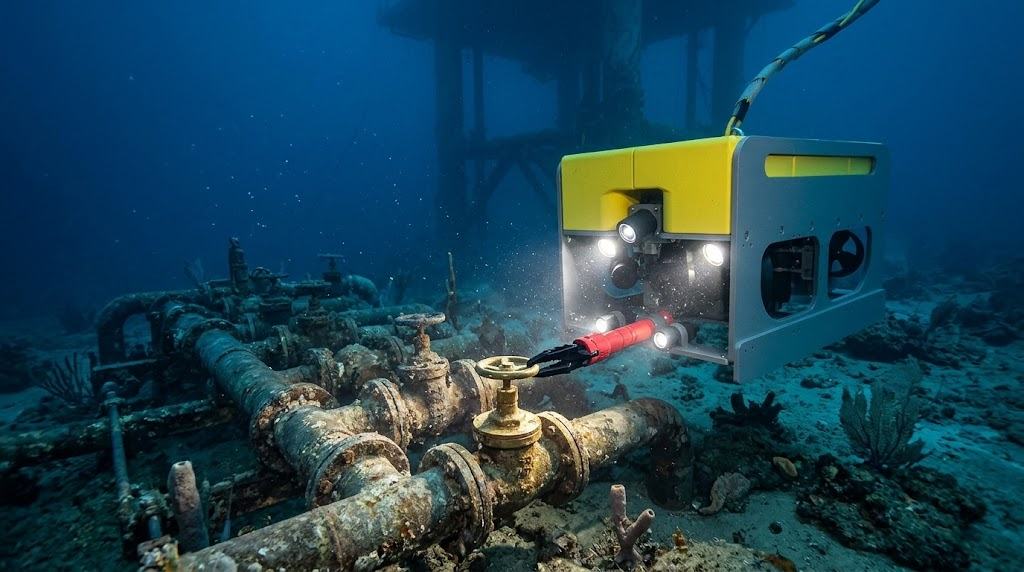
Exploring the ocean depths requires advanced and reliable equipment. For many years, companies relied heavily on standard subsea vehicles to perform complex tasks. Today, the debate between choosing an intervention class AUV and a traditional system is growing rapidly. Each technology offers unique strengths for deep-water engineering.
Industry professionals often ask when to use tethered machines versus autonomous systems. By understanding how an underwater manipulator AUV compares to standard tools, operators can choose the right setup for their projects. In this article, we will examine both technologies and look at why hybrid autonomy is changing modern subsea work.
Understanding Work-ClassROVsand Their Limitations
A traditional work-class machine remains a trusted choice for offshore operations. It stays connected to a surface ship via a thick umbilical cable. This tether supplies constant power and a direct communication link. Because of this direct connection, operators can control the vehicle with high precision.
However, running a tethered system comes with significant challenges. Surface vessels cost a lot of money to charter every single day. Furthermore, strong ocean currents can push against the long cable, making navigation difficult in deep waters. While these systems excel at heavy tasks, their operational range is always limited by the physical tether.
The Rise of Intervention-ClassAUVs
To solve the limits of tethered systems, engineers developed autonomous solutions. An intervention AUV operates without a physical umbilical cord. It moves freely through the water, powered by onboard batteries and guided by advanced software.
Because it lacks a tether, this autonomous machine can travel much faster and cover greater distances. It does not need a massive support ship hovering directly above it for every minor task. Pelagix designs cutting-edge subsea technology that pushes the boundaries of autonomy, allowing for efficient long-range underwater navigation and data collection.
Why Hybrid AUV ROV Systems Make Sense
Both autonomous and tethered technologies have clear pros and cons. Therefore, engineers created a smart solution that combines the best features of both worlds: the hybrid AUV ROV.
A hybrid AUV ROV can travel freely like an autonomous vehicle to reach distant subsea fields. Once it arrives at the work site, it can dock or switch modes to perform delicate operations. This flexibility reduces the need for large surface vessels and lowers overall project costs.
Powering Subsea IMR and Complex Interventions
Maintenance and repair tasks require advanced physical interaction with underwater infrastructure. A modern subsea IMR robot handles inspection, maintenance, and repair efficiently without risking human safety.
When equipped with robotic arms, an underwater manipulator AUV can turn valves, clean structures, and fix minor pipeline faults. Pelagix develops robust subsea systems that provide the high payload capacity and stability needed for these demanding tasks. By blending autonomy with physical intervention, companies can complete deep-water projects faster and safer than ever before.
Conclusion
Choosing the right subsea technology depends on the goals of your project. While traditional systems remain useful for localized heavy work, an intervention class AUV offers unmatched freedom and range. Ultimately, adopting a hybrid AUV ROV or a specialized subsea IMR robot helps companies save money and improve efficiency. As marine technology continues to evolve, smart automation will shape the future of all underwater operations.


