Matching Underwater Thruster Power with Payload, Tether Drag and Hovering Tasks
News Details

Building or upgrading a subsea vehicle requires careful engineering. When you design an autonomous underwater vehicle (AUV) or a remotely operated vehicle (ROV), getting the propulsion right is vital. If your motors are too weak, your vehicle will struggle against ocean currents. Conversely, if they are too large, they will drain your battery too fast. Therefore, mastering underwater thrusterselection is essential for any successful marine mission.
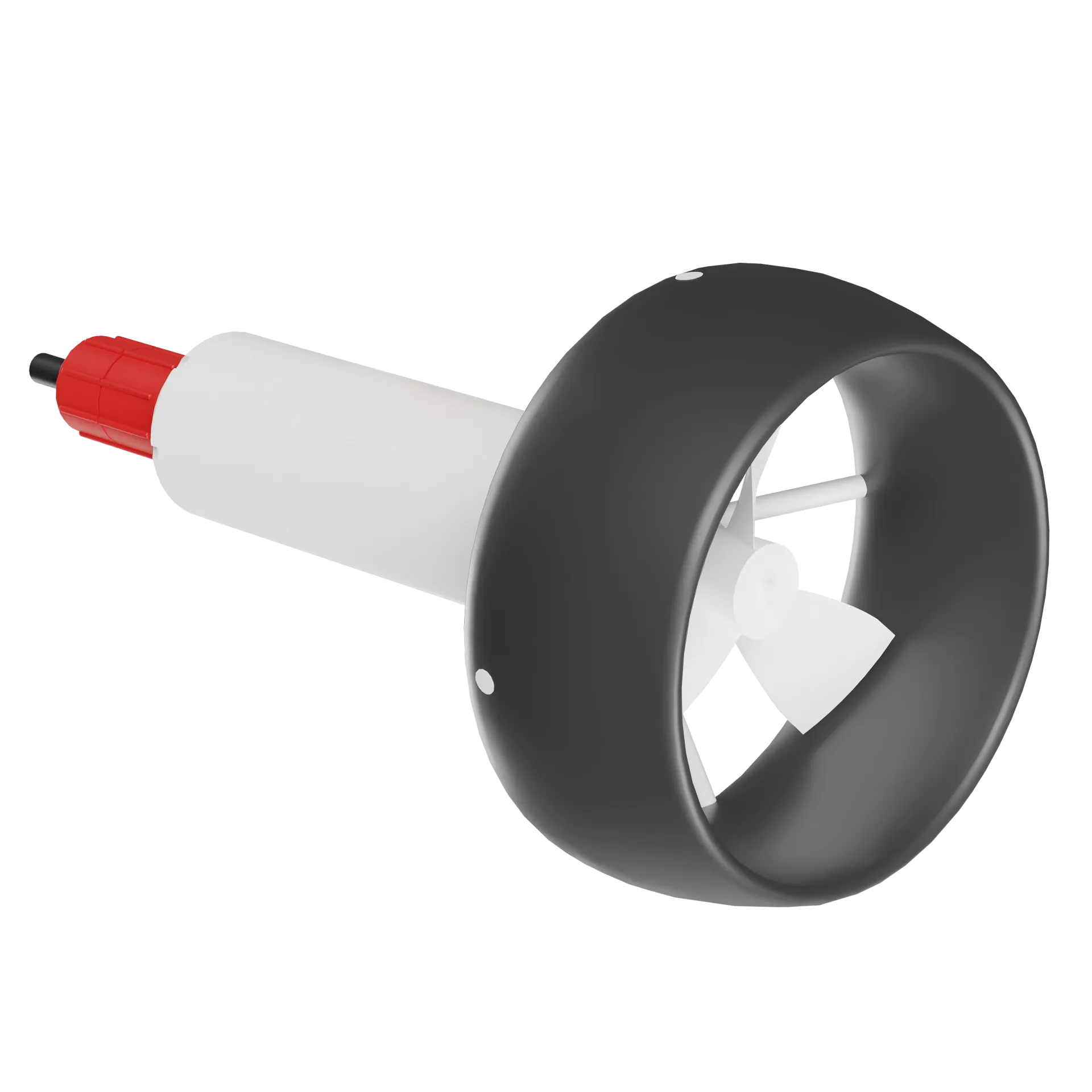
To achieve peak performance, engineers must balance multiple physical forces. This guide will help you match your propulsion to your payload weight, ROV tether drag, and precise hovering tasks.
1. Accounting for Payload and Buoyancy Changes
Every subsea vehicle carries a specific payload. Whether you are mounting heavy sonar gear, scientific sensors, or mechanical arms, added weight changes your vehicle’s balance and drag profile.
-
Weight vs. Displacement: As you add cargo, your vehicle’s overall weight increases. You need enough vertical thrust to overcome negative buoyancy safely.
-
Hydrodynamic Drag: Bulky payloads create extra resistance as the vehicle moves through water.
-
Power Margins: Always add a safety margin to your motor power calculations. If you plan for a specific workload, ensure your motors can deliver extra force when unexpected currents push against your gear.
2. Managing ROV Tether Drag in Moving Water
For tethered systems, the umbilical cable acts like a giant anchor in fast currents. Water flowing against a long tether creates massive sideways force, pushing the vehicle off its target line.
-
Understanding Cable Resistance: Thicker tethers catch more water current. Consequently, they require much higher subsea propulsion power to maintain a steady position.
-
Offsetting Lateral Forces: Your horizontal thrusters must work harder to fight cable pull.
-
Smart Route Planning: Keep your cable length as short as possible and use streamlined umbilical designs to minimize drag before it impacts your vehicle's travel speed.
3. Mastering Hovering Tasks and Current Resistance
Hovering in place sounds simple, but it is one of the hardest challenges in subsea robotics. Whether your vehicle is inspecting a pipeline or filming marine life, staying completely still requires precise control.
-
Constant Adjustments: Ocean waves and vertical upwellings push vehicles constantly.
-
Response Time: Your motors must react instantly to sensor inputs to correct drifting.
-
Power Distribution: Stable hovering needs a fine balance between vertical and horizontal power. Without adequate force, your vehicle will bob up and down, ruining data collection and video quality.
4. Leveraging a Vector Thruster Layout
Traditional thruster setups only push forward, backward, or up and down. However, modern subsea operations demand multi-directional movement.
-
Omnidirectional Control: A smart vector thruster layout angles motors at specific vectors. This setup lets the vehicle move sideways and rotate with absolute precision.
-
Better Maneuverability: Instead of turning the entire hull, vector setups let your vehicle slide smoothly along underwater structures.
-
Efficiency Gains: By angling your thrusters, you use fewer motors to achieve complex multi-axis movements, saving valuable battery life during long missions.
5. Practical Steps for AUV Thruster Sizing
Proper AUV thruster sizing prevents mid-mission failures. Because AUVs run on strict battery power, every watt counts.
-
Calculate Peak and Cruising Loads: Estimate the power needed for top speed versus steady cruising.
-
Evaluate Propeller Pitch: Match your motor RPM with the right propeller size to maximize thrust efficiency.
-
Factor in Depth and Pressure: Remember that deep-sea pressure changes fluid dynamics slightly, so select robust motors rated for your operational depth.
Conclusion: Build Smarter Subsea Systems with PELAGIX
Matching your subsea propulsion to real-world marine conditions ensures safer missions and longer vehicle lifespans. By carefully balancing your payload, minimizing umbilical drag, and utilizing advanced motor configurations, your underwater vehicles will perform reliably in any environment.
Ready to upgrade your marine robotics hardware? Partner with PELAGIX to find high-performance components tailored to your exact subsea requirements.
Contact the PELAGIX team today to discuss your custom propulsion and thruster integration needs.


