ROV Payload, Thrusters and Tether Requirements: A B2B Buyer’s Guide
News Details
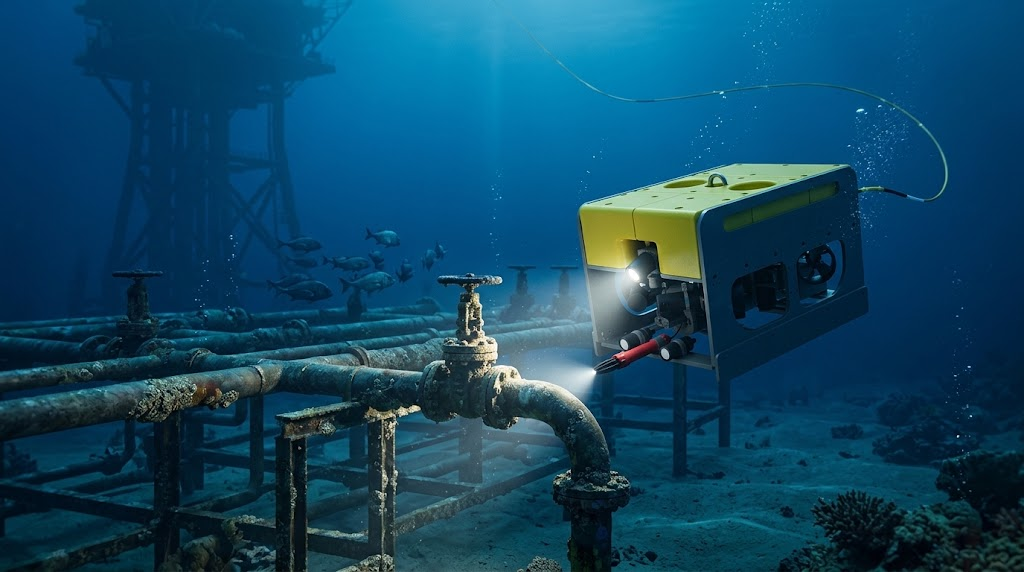
Choosing the right ROV is not only about depth rating or camera quality. For most B2B buyers, the real value comes from how well the vehicle carries tools, moves in water, and stays connected during daily work.
That is why ROV payload capacity, ROV thruster configuration, tether management, and subsea ROV price should be reviewed together. If one part is mismatched, the whole system may feel hard to use, slow to deploy, or costly to maintain.
PALEGIX provides ROV solutions for underwater inspection, ocean research, dam checks, pipeline inspection, port work, and other civil marine tasks. This guide will help buyers make a clearer and safer choice before sending an inquiry.
Why Payload Capacity Matters
ROV payload capacity means how much extra weight the vehicle can carry while still working well underwater. This may include cameras, lights, sonar, sampling tools, sensors, cleaning tools, or inspection devices.
A higher payload is useful when the project needs more tools at the same time. However, more payload also affects balance, power use, and movement. So, buyers should not only ask, “How many kilograms can it carry?” Instead, they should ask how the ROV performs with the full working load.
For example, an ROV used for water quality sampling may need sensors and sample bottles. An ROV used for offshore wind foundation inspection may need strong lights, imaging tools, and stable positioning. In each case, the best choice depends on real work needs.
Before buying, list every tool you plan to mount. Then add future needs as well. This gives your supplier a better view of the right frame size, buoyancy design, and power plan.
How to Match Payload With Your Work
A small ROV is often enough for visual checks, tank inspection, aquaculture, and light underwater data collection. It is easier to move, faster to launch, and simpler for small teams.
A larger ROV is better when the work needs more sensors, longer operating time, or more stable movement in changing water conditions. It can support more advanced tools and carry a heavier setup.
In general, buyers should check these points:
Does the ROV have enough payload margin after all tools are installed?
Can the frame support extra devices without blocking cameras or lights?
Will the ROV stay stable when tools are mounted on the front, bottom, or side?
Can the power system support all payload devices?
Is the payload easy to install, remove, and service?
A good ROV payload capacity gives your team room to adapt. It also helps reduce the need to buy another system too soon.
Understanding ROV Thruster Configuration
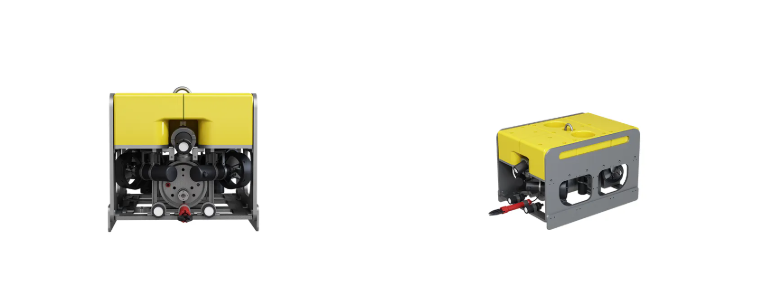
ROV thruster configuration has a direct effect on control, stability, and work speed. Thrusters allow the ROV to move forward, backward, sideways, up, down, and rotate.
A simple setup may work for basic visual inspection in calm water. However, a more advanced vector layout can give smoother motion and better control in tight spaces. This is helpful for dam inspection, port structure checks, underwater construction support, and seabed survey work.
When comparing ROV thruster configuration, look at more than the number of thrusters. Also review their position, angle, thrust output, and control logic. A well-designed layout can make the ROV easier to hold in place and easier to guide near structures.
For many B2B projects, stable movement is more important than top speed. Smooth control helps operators capture clearer images, collect better data, and reduce the risk of tool contact with nearby structures.
Key Thruster Questions for Buyers
Before choosing a model, ask your supplier these questions:
How many thrusters does the ROV use?
Is the thruster layout suitable for side movement and vertical control?
Can the system hold a steady position during inspection?
How does the ROV perform in currents or low-visibility water?
Are the thrusters easy to clean, replace, and maintain?
What protection is used around the propellers?
These questions help you understand real working performance. They also help you compare systems in a practical way, not only by specification sheets.
Why Tether Management Is Critical
Tether management is often overlooked, yet it can shape the whole user experience. The tether sends power, control signals, and data between the ROV and the surface system. It also affects drag, launch work, recovery, and safety during operation.
A poorly managed tether can slow the ROV, increase operator stress, and raise the chance of snagging around rocks, structures, or underwater equipment. On the other hand, good tether management keeps work smoother and more predictable.
For shallow water or simple inspection, a basic tether may be enough. For longer runs, deeper work, or complex sites, buyers may need a stronger tether, a longer cable, or a tether management system.
The right choice depends on water depth, working distance, current, site shape, and how often the ROV will be used.
What to Check in a Tether System
A strong tether plan should match both the ROV and the work site. Buyers should review cable length, cable diameter, weight in water, bending strength, and connector quality.
Also, check how the tether is stored and handled. A clean reel system saves time during launch and recovery. It also helps protect the cable during transport.
For frequent field use, ask about repair options and spare parts. Tether damage can stop a project quickly, so easy maintenance is important.
Good tether management can also improve data quality. When cable drag is lower and movement is smoother, the ROV can keep a more stable view during inspection and mapping tasks.
How Payload, Thrusters, and Tether Work Together
These three parts should never be reviewed alone. A heavy payload may need stronger thrusters. Stronger thrusters may need more power. A longer tether may create more drag. More drag may reduce movement speed or make control harder.
Because of this, the best ROV is a balanced system.
For example, if your team needs to inspect a long underwater pipeline, the ROV may need strong lights, sonar, and long tether support. In that case, the supplier should confirm that the thrusters can handle the added payload and cable drag.
For a dam or reservoir inspection, stable vertical control may matter more. For seabed data collection, payload space and sensor support may be the key. For port work, easy launch and fast setup may save the most time.
A clear project profile helps PALEGIX recommend a better-fit system.
What Affects Subsea ROV Price
Subsea ROV price can vary widely because each project has different needs. Depth rating, payload capacity, thruster layout, camera system, lights, sensors, tether length, control station, and software can all affect the final cost.
A lower-cost ROV may be enough for simple visual tasks. However, if the project needs higher stability, more payload, or longer operating range, a stronger system may offer better long-term value.
Buyers should also consider training, spare parts, maintenance, shipping, and future upgrades. The purchase price is only one part of the full cost.
Instead of asking only for the cheapest model, it is better to share your work goals, water depth, payload list, and expected use frequency. Then the supplier can recommend a system that fits both performance and budget.
Buyer Checklist Before Requesting a Quote
Before contacting PALEGIX, prepare these details:
Working depth and water type
Main application, such as inspection, sampling, mapping, or data collection
Required ROV payload capacity
Tools or sensors to be installed
Preferred ROV thruster configuration
Expected tether length
Launch site conditions
Power and control needs
Budget range and delivery timeline
With this information, the sales and technical team can reply faster and provide a more useful proposal.
Choose a Practical ROV System With PALEGIX
A good ROV should be easy to operate, stable in the water, and ready for real field work. Payload, thrusters, and tether design all play a major role in that result.
PALEGIX supports civil underwater applications such as marine environment monitoring, underwater structure inspection, seabed mapping, aquaculture support, reservoir checks, offshore wind foundation inspection, and research-grade data collection.
If you are comparing ROV payload capacity, ROV thruster configuration, tether management options, or subsea ROV price, contact PALEGIX for a project-based recommendation.
Contact PALEGIX here: https://www.pelagix-tech.com/pages/Contact-Us


