Marine Robotics News: Offshore Wind, Test Sites and ROVs
# Top Underwater Civil Developments This Week Fugro secures ROV survey contract for 960 MW East Anglia TWO offshore wind farm. Equinor inaugurates KNARR marine robotics test centre. UK expands compact ROV fleet with 15 units for civil infrastructure. Global Marine unveils next-gen cable maintenance ROV for offshore renewables. What these updates mean for underwater programme planners.
2026/11/20
Reading volume: 0
News Details
The past two months have brought a steady stream of civil underwater-robotics developments, from new offshore wind survey contracts to dedicated marine robotics test infrastructure and expanding compact ROV fleets. This roundup summarizes four recent industry updates — dated and attributed to their sources — and what they signal for organizations planning underwater survey, inspection and monitoring work.
Offshore Wind Continues to Drive ROV Survey Demand
On 4 November 2026, Fugro announced a contract from Danish installation contractor Cadeler to perform post-installation seabed surveys at the 960 MW East Anglia TWO offshore wind farm in the UK. From early 2027, Fugro will deploy its FCV 600 work-class ROV from a Cadeler installation vessel to inspect 64 monopile foundation locations, verifying installation quality and collecting Geo-data to support long-term foundation integrity. The same engagement continues at Hornsea 3, where Fugro specialists aboard the installation vessel Wind Ally use InclinoCam vision technology to monitor the tilt and alignment of 197 monopiles at centimetre-level accuracy. The pattern is clear: as gigawatt-scale wind farms come online, installation-stage ROV support and post-installation inspection are becoming recurring, contract-backed work rather than occasional survey jobs.
Energy Operators Are Building Dedicated Robotics Test Infrastructure
On 28 October 2026, Equinor opened the KNARR marine robotics centre at its Kårstø processing plant in Norway. The facility lets developers test and qualify underwater drones, robots and unmanned vessels on real subsea infrastructure, with three designated test areas at 25, 140 and 250 metres depth, 3 km of seabed cable and associated electronics for long-duration sensor testing. Equinor expects marine robots to take over routine inspection, monitoring and maintenance tasks now performed by larger vessels, with projected savings of several tens of millions of dollars annually and a cost-reduction target set for 2035. The centre serves multiple sectors — oil and gas, aquaculture, offshore wind and shipping — and signals that energy operators are investing in the qualification infrastructure needed to move inspection robots from trial to routine deployment.
Compact ROV Fleets Are Expanding into Aquaculture and General Inspection
UK-based Underwater Contracting Limited (UCO) has integrated fifteen Deep Trekker PIVOT remotely operated vehicles into its fleet, according to an October 2026 report by Ocean Science & Technology. The observation-class compact ROVs, combined with purpose-developed tooling, extend the range of tasks UCO can perform remotely across aquaculture, offshore energy and marine inspection — from routine inspections and seabed surveys to net repairs, equipment retrieval and other subsea maintenance. The fleet purchase reflects a wider trend: compact ROVs are moving from niche tools to standardized fleet assets, with buyers valuing fast deployment, low operational overhead and the ability to perform light intervention work without a full work-class spread.
Cable Maintenance Investment Signals Long-Term Subsea Network Care
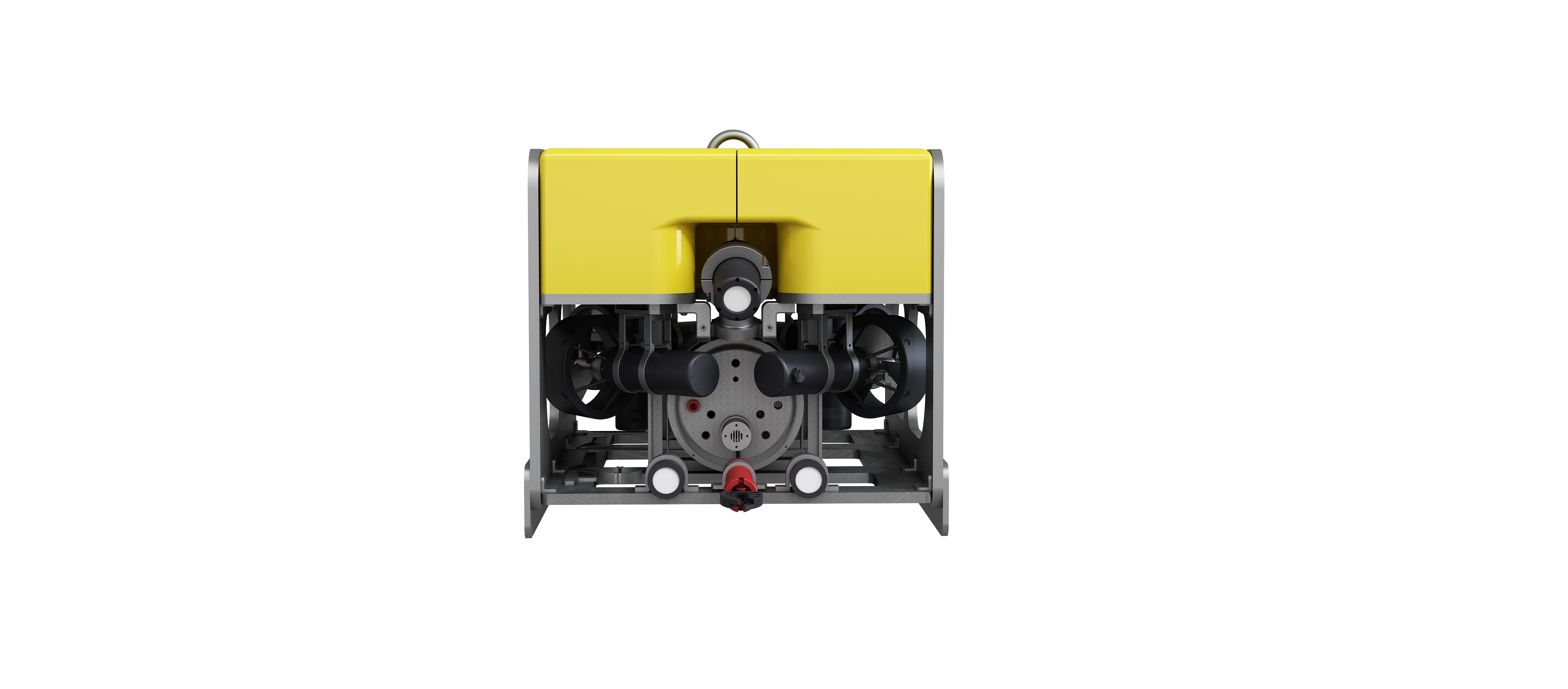
On 2 October 2026, Riviera Maritime Media reported that Global Marine has partnered with Orange Marine to supply a next-generation Alpha ROV for Global Marine's new cable maintenance vessel, currently under construction in Sri Lanka and scheduled for delivery in Q4 2029. The Alpha ROV, built by Orange Marine in France, carries 450 kW of installed power (300 kW dedicated to jetting), operates to 3,000 metres, and performs cable burial to 3 metres depending on seabed conditions, in a tracked configuration adaptable to free-swimming mode. Its task set covers cable detection, inspection and survey, cutting and gripping, and burial or reburial work. For programme planners, the investment underscores that subsea cable networks — telecommunications and power alike — require decades of maintained inspection and intervention capability, not one-off campaigns.
What the Roundup Shows
Taken together, the four updates point to four practical conclusions for organizations planning underwater vehicle programmes:
- Inspection demand is becoming contractual and recurring. Post-installation wind-farm surveys and scheduled integrity checks favor suppliers and fleets organized for repeatable campaigns.
- Real-infrastructure testing is the new qualification gate. Facilities like KNARR show that operators want robots proven against live assets before deployment.
- Fleet standardization is reaching compact classes. Multi-unit purchases of observation-class ROVs indicate that even small vehicles are now managed as coordinated fleets with standardized tooling.
- Intervention capability is being planned decades ahead. Cable-maintenance ROVs ordered years before vessel delivery show how long the planning horizon for subsea networks really is.
PelagiX supplies tethered observation-class ROVs, autonomous underwater vehicles, docking systems and integrated control software for civil survey, inspection and monitoring programmes. The full product range is listed at pelagix-tech.com, where buyers can request configuration guidance for a specific programme.
Share to:


