How Deep Can AUVs Dive? Understanding Subsea Depth Limits
News Details
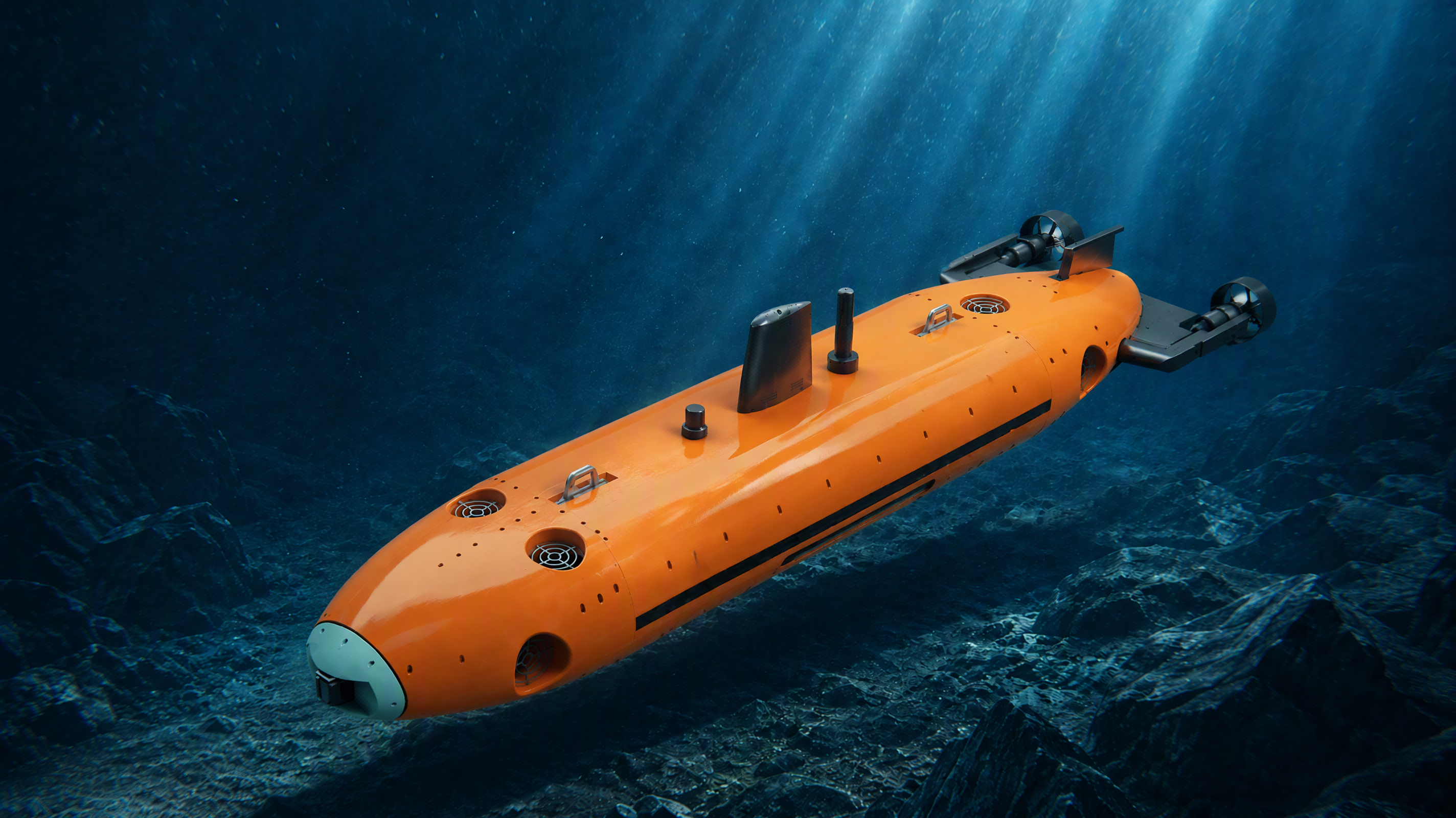
Subsea exploration relies heavily on advanced robotics to map the ocean floor, inspect pipelines, and gather scientific data. However, many people entering the marine technology sector often start with a simple question: what is an auv and how deep can it go?
Understanding depth capabilities is key when choosing the right system for offshore energy, marine research, or subsea surveying. Depth ratings vary widely based on vehicle design, hull materials, and power systems.
What Is AUV? DefiningAutonomous Underwater Vehicles
To understand depth performance, we first need to look at the auv meaning. An autonomous underwater vehicle is a self-propelled, uncrewed submersible that operates without a physical tether to a surface ship.
Unlike Remotely Operated Vehicles (ROVs), which rely on tether cables for control and power, an AUV uses onboard computers, sensors, and pre-programmed software to navigate. When asking what is auv tech built for, the short answer is efficient, hands-free data collection over vast underwater areas.
How Deep Can Autonomous Underwater Vehicles Dive?
Autonomous underwater vehicles operate across a wide range of depth categories. Engineers group them into three primary operational tiers:
-
Shallow-Water AUVs: Operating up to 200 to 300 meters deep.
-
Mid-Depth AUVs: Operating from 1,000 to 3,000 meters deep.
-
Deep-Water AUVs: Operating from 6,000 meters down to 11,000 meters in full ocean depths.
1. Shallow-Water Systems (0 to 300 Meters)
Compact and light, these vehicles focus on coastal surveys, port maintenance, and environmental monitoring. They rarely need heavy pressure hulls, which keeps costs lower and handling easier.
2. Mid-Depth Workhorses (1,000 to 3,000 Meters)
Commercial industries frequently use these mid-range systems for subsea oil and gas inspections, cable layout, and deep-water mapping. They balance strong payload capacity with robust depth endurance.
3. Deep-Sea & Ultra-Deep Systems (up to 6,000 Meters and Beyond)
Heavy-duty survey vehicles reach up to 6,000 meters, opening access to nearly 98% of the world’s ocean floor. Furthermore, specialized research vehicles can reach full ocean depth—down to 11,000 meters in deep trenches like the Mariana Trench.
Major Factors That Limit Subsea Depth
Reaching extreme ocean depths is not easy. Several physical and engineering factors dictate how deep an autonomous underwater vehicle can dive safely:
-
Hydrostatic Pressure: For every 10 meters of depth, pressure increases by about one atmosphere (14.7 psi). At 6,000 meters, pressure exceeds 8,700 psi. Pressure hulls must use strong materials like titanium, thick aluminum, or syntactic foam to avoid collapse.
-
Buoyancy and Weight: Deeper dives demand heavier protective housing. However, vehicles must stay neutrally buoyant to maneuver smoothly, requiring precise buoyancy control.
-
Acoustic Navigation and Signal Loss: Radio waves do not travel through deep water. As a result, deep-diving vehicles rely entirely on acoustic signals, Doppler Velocity Logs (DVL), and inertial navigation systems (INS) to stay on track.
-
Battery Endurance: Deep dives require significant power just to descend and ascend. High-density lithium-ion battery packs ensure the vehicle completes its survey mission before coming back up.
Primary Applications for Deep-Diving AUVs
Deep-rated vehicles provide vital data for many industries:
-
Offshore Energy: Inspecting deep-water seabed structures, pipelines, and flowlines.
-
Marine Geology & Oceanography: Mapping underwater ridges, bathymetry, and thermal vents.
-
Subsea Telecoms: Surveying deep paths for optic fiber cables across oceans.
-
Commercial Search & Recovery: Locating missing submerged assets and equipment in deep offshore zones.
The Future of Subsea Autonomy
As ocean operations move into deeper, harsher environments, subsea robotics continue to evolve. Next-generation systems feature longer dive endurance, real-time edge computing, and smart collision avoidance.
At Pelagix, advanced subsea solutions help operators expand subsea awareness, optimize data collection, and streamline autonomous underwater operations at every depth.


