Digital Twins for AUV/ROV Mission Planning and Ocean Monitoring
News Details
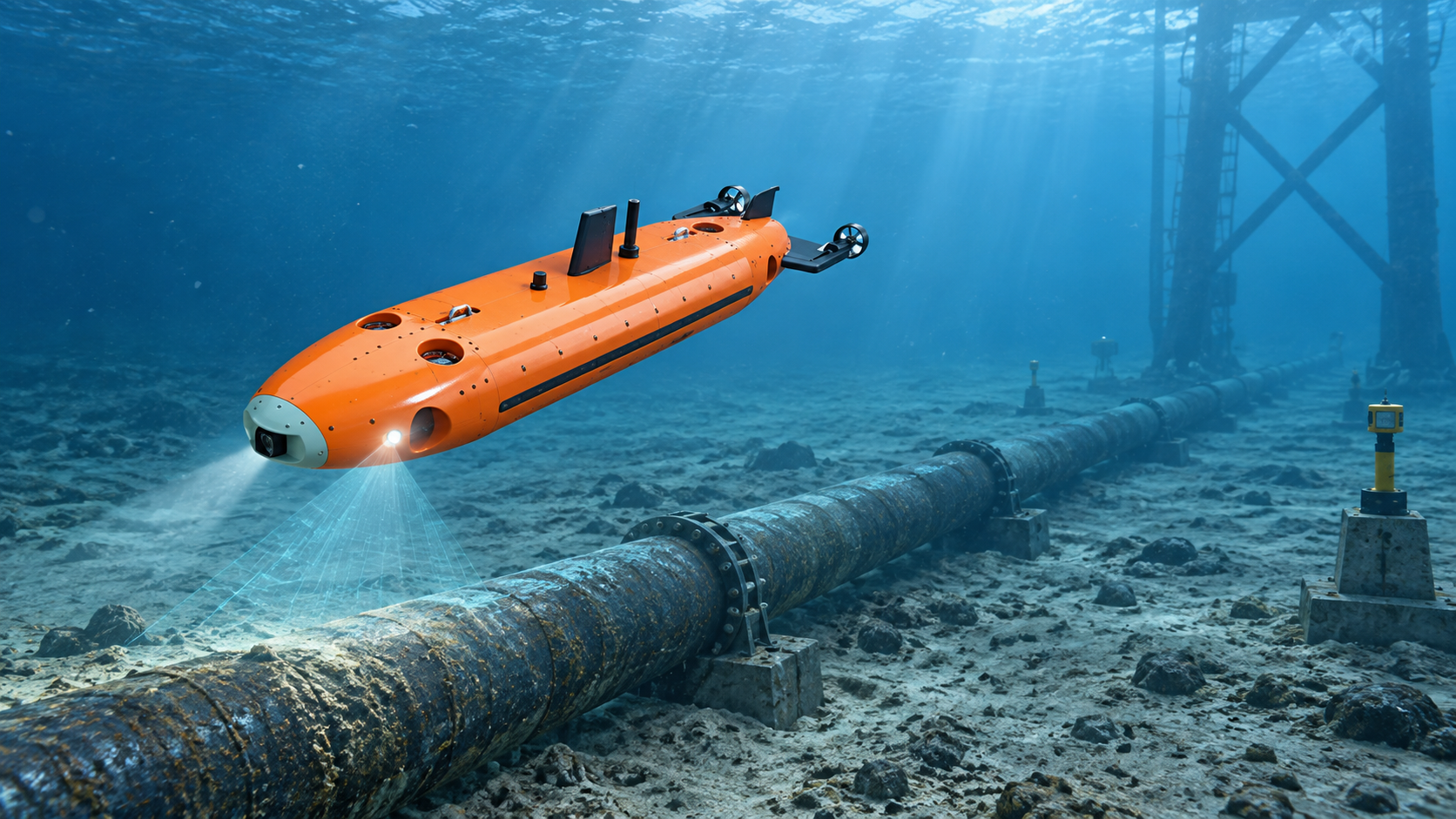
Digital twin technology is transforming the way marine teams plan, test, and manage underwater operations. In the past, many AUV and ROV missions relied on field tests, manual checks, and experience-based planning. These methods are still valuable, but they can be time-consuming, costly, and risky, especially when the operation area is deep, remote, or complex.
Today, subsea digital twins provide teams with a more intelligent approach to preparation. By creating virtual models of underwater vehicles, mission routes, payloads, and ocean environments, engineers can test concepts before the vehicle ever enters the water.
For PELAGIX, a brand under Sanya Poseidon Ocean Technology Co., Ltd., this approach aligns closely with its expertise in Autonomous Underwater Vehicles (AUVs), Remotely Operated Vehicles (ROVs), software systems, AI forecasting, and deep-sea intelligent equipment.
What Is a Subsea Digital Twin?
A subsea digital twin is a digital representation of a real underwater system and its operational environment. It can include the AUV or ROV body, thrusters, sensors, battery status, control logic, payloads, seabed terrain, water currents, and mission objectives.
Simply put, it is a safe virtual space for underwater mission planning and testing. Teams can use it to predict how a vehicle might move, how much power it might consume, and how it will respond to changing ocean conditions.
Given the inherently unpredictable nature of underwater work, this type of model is highly valuable. It helps users reduce guesswork and develop more robust mission plans before deployment.
Why Digital Twins Are Essential for AUV and ROV Operations
AUVs and ROVs often operate in environments where human presence is unsafe or impossible. These areas can be deep, dark, cold, or difficult to access. Additionally, underwater signals are typically weak, and ocean currents can change rapidly.
This demands meticulous mission planning. Even minor errors in route design, power management, or sensor configuration can jeopardize the entire operation.
An underwater robotics digital twin allows teams to review and rehearse the mission in advance. They can test routes, evaluate vehicle responses, and adjust plans without wasting valuable sea time. Furthermore, different mission scenarios can be simulated and compared efficiently.
This directly enhances safety, reduces operational costs, and increases the likelihood of mission success.
AUV Simulation for Enhanced Mission Planning Safety
AUV simulation is one of the most prominent applications of digital twin technology. Since AUVs operate without a tether, they must make numerous autonomous decisions. They require reliable navigation, stable control, and clear mission logic.
Before launch, engineers can utilize AUV simulation to test planned routes. They can also evaluate depth profiles, turning points, survey lines, and potential risk areas.
For example, in seabed mapping, a digital model can verify whether the AUV can adequately cover the target area given its sensor range. In marine engineering surveys, it can confirm if the route is both safe and efficient. In scientific research, it can optimize data collection strategies to minimize wasted time.
Consequently, simulation enables teams to conduct underwater operations with greater confidence.
Mission Rehearsal Before Actual Deployment
Mission rehearsal is another critical advantage of subsea digital twins. It allows operators to practice the full scope of a task before real-world deployment.
During mission rehearsal, teams can test starting points, waypoints, payload configurations, emergency procedures, and return routes. They can also anticipate how the vehicle might react to current shifts or path obstructions.
This is beneficial for both AUV and ROV missions. For AUVs, rehearsal improves autonomy and route planning. For ROVs, it helps operators prepare for inspection tasks, tool manipulation, and precise maneuvering near subsea structures.
Additionally, mission rehearsal supports team training. New operators can familiarize themselves with mission workflows in a virtual environment before going to sea.
Enhanced Ocean Monitoring with Digital Twins
Ocean monitoring requires stable, repeatable, and accurate data. However, the ocean is a dynamic environment. Temperature, currents, depth, and seabed features all influence mission outcomes.
A digital twin can integrate vehicle data with oceanographic data. This provides teams with a comprehensive understanding of not only the vehicle's location but also how environmental factors affect its performance.
This is particularly useful for long-term monitoring programs. Teams can compare planned versus actual vehicle behavior, allowing them to refine future missions based on empirical data.
PELAGIX specializes in AI large foundation models for deep-sea mesoscale eddy forecasting, as well as AUV autonomous navigation and SLAM systems. These technological capabilities contribute to improved ocean awareness, intelligent path planning, and more reliable underwater operations.
Supporting PELAGIX AUV and ROV Applications
As stated on the PELAGIX website, Sanya Poseidon Ocean Technology Co., Ltd. is dedicated to the R&D, manufacturing, sales, and technical services of advanced deep-sea intelligent equipment. Its core focus is on the development and commercial application of AUVs and ROVs.
PELAGIX AUV products facilitate deep-sea exploration, marine engineering surveys, seabed mapping, underwater inspection, and scientific research. Its ROV products support oceanographic studies, dam inspections, subsea operations, environmental monitoring, and light pipeline maintenance.
Digital twin tools can further enhance the value of these applications. For instance, they can assist in planning AUV survey lines for seabed mapping or rehearsing ROV inspection routes around dams, pipelines, or other subsea infrastructure.
In this way, the digital twin transcends its role as a mere model; it becomes an integrated planning tool, training simulator, and decision-support system.
Leveraging Vehicle Data for Informed Decision-Making
A digital twin becomes increasingly powerful when it incorporates real mission data. After each operation, teams can analyze power consumption, route accuracy, sensor performance, and environmental changes.
The model can then be updated based on these insights, creating a feedback loop where each mission informs and improves the next.
For users, this means continuously improving planning efficiency over time. It also translates into fewer repeat missions, reduced downtime, and clearer, more actionable results.
In the field of underwater robotics, data serves not only as a historical record but also as a roadmap for optimizing future operations.
Key Advantages of Underwater Robotics Digital Twins
A well-implemented underwater robotics digital twin offers numerous benefits to marine operations teams.
Firstly, it enhances mission planning by allowing teams to test routes, timelines, and payload configurations before deployment.
Secondly, it mitigates risk by enabling operators to identify and address potential issues before the vehicle enters the water.
Thirdly, it saves time and costs by reducing failed missions and the need for repeated field tests, thereby improving overall operational efficiency.
Fourthly, it supports training initiatives by providing operators with a safe space to practice complex tasks.
Finally, it drives long-term performance improvement by using real mission data to refine models and optimize future operations.
The Future of Digital Twins in Deep-Sea Operations
As AUVs and ROVs become more sophisticated, digital twins will play an even more integral role. Future systems are likely to integrate real-time data, AI forecasting, sensor fusion, and multi-vehicle coordination.
This evolution is crucial for complex tasks such as deep-sea surveys, offshore inspections, environmental monitoring, and collaborative multi-AUV missions.
PELAGIX is already at the forefront of developing key technologies, including AUV autonomous navigation and SLAM systems, underwater small-target recognition, AUV underwater docking, UUV entanglement identification, and multi-AUV collaborative survey and swarm control systems.
When combined with subsea digital twin technology, these capabilities will enable safer, more intelligent, and highly efficient ocean operations.
Building Intelligent Ocean Missions with PELAGIX
Digital twins empower marine teams with superior methods for planning and managing underwater missions. Through AUV simulation, mission rehearsal, and ocean monitoring, users can minimize risk and maximize outcomes both before and during real-world operations.
For PELAGIX, digital twin technology supports the overarching objective of advancing intelligent ocean equipment. As underwater missions grow in complexity, the synergy between virtual planning and real-world robotics will become increasingly vital.
From seabed mapping to subsea inspections, and from scientific research to ocean monitoring, digital twins are steering AUV and ROV users toward a more intelligent and efficient future.


