How to Select a Deep-Sea AUV Manufacturer for 6000m Missions
News Details
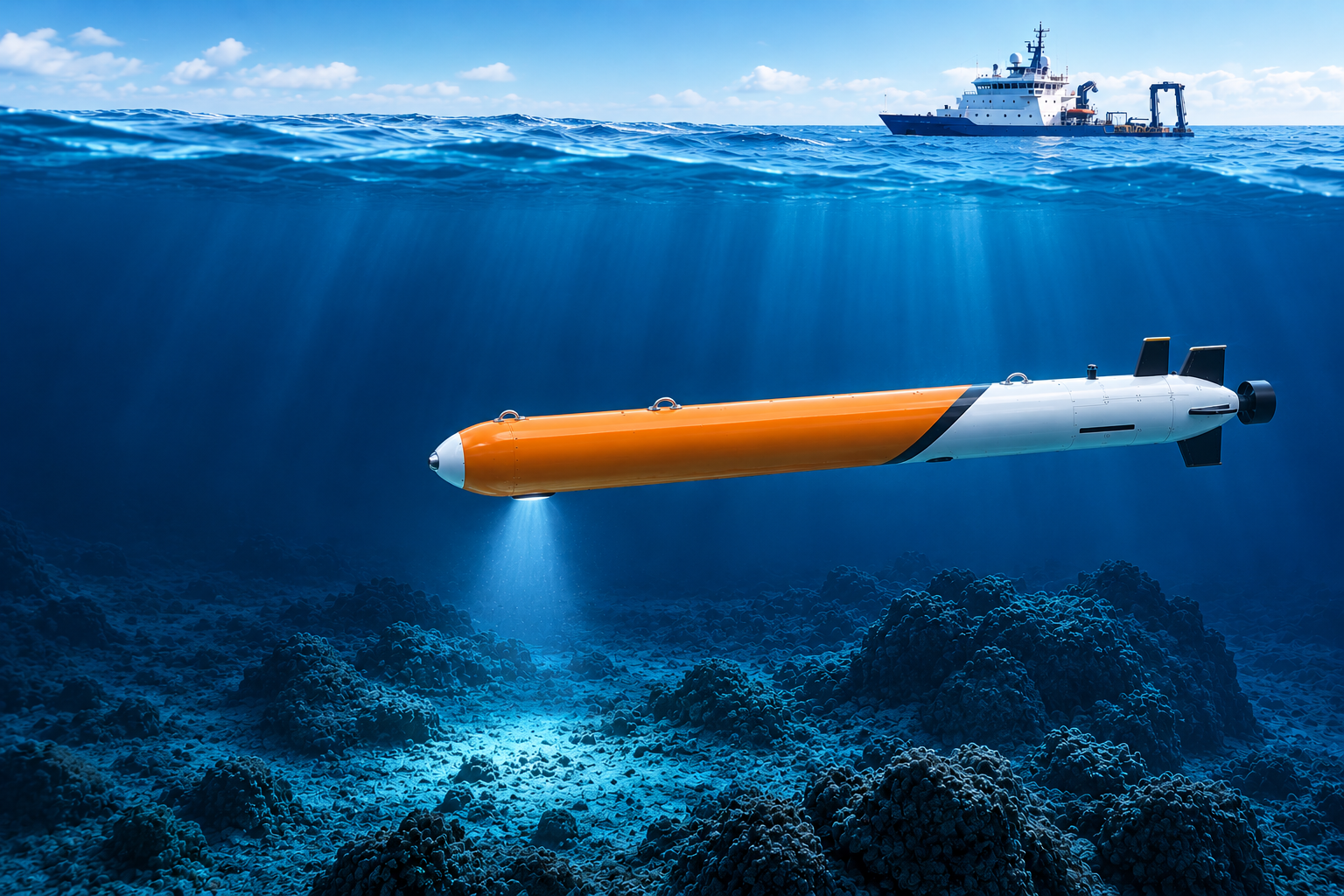
A 6000m underwater mission places far higher demands on an autonomous underwater vehicle than a typical marine survey. At this depth, pressure, navigation, communication, power, and system reliability all become critical.
Therefore, choosing a deep sea AUV manufacturer is not simply about comparing vehicle size or advertised depth. Instead, buyers need to look at the complete system, including the vehicle platform, navigation system, payload integration, software, mission control, and technical support.
For research institutions, marine engineering companies, ocean survey teams, and government projects, these factors can directly affect mission safety and data quality.
Why 6000m Missions Require Specialized AUVs
At 6000m, an AUV operates in an extreme underwater environment. The pressure is much higher than at shallow depths, while GPS signals are unavailable and direct communication with the surface is limited.
As a result, a 6000m AUV needs more than a pressure-resistant structure. It also requires reliable navigation, stable propulsion, efficient power management, and accurate mission control.
The vehicle must also carry the sensors required for the specific deep ocean survey. Depending on the mission, these may include imaging, sonar, navigation, environmental, or other scientific payloads.
This is why a deep-sea AUV should be evaluated as an integrated system rather than as a single underwater vehicle.
Check the Actual Depth Rating
The first factor to check is the vehicle's rated operating depth.
A manufacturer may describe a system as suitable for deep water, but that does not necessarily mean it is designed for 6000m missions. Buyers should confirm the rated depth, operating conditions, pressure-related design, and testing standards.
For a 6000m project, it is also useful to understand whether the vehicle has been designed specifically for deep-sea operation rather than simply modified from a shallower platform.
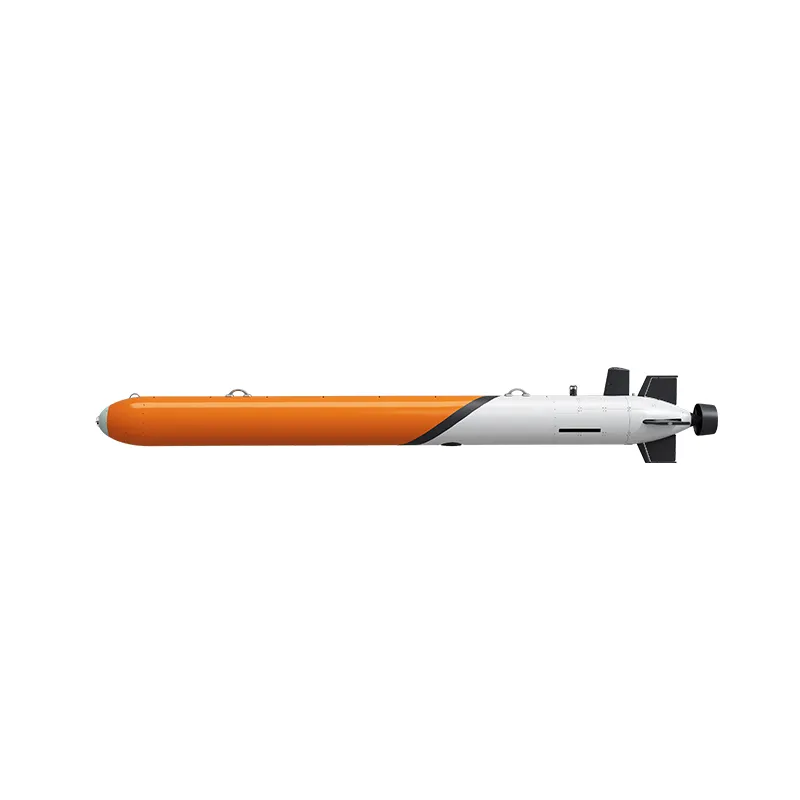
PALEGIX's AUV-600 is a large autonomous underwater vehicle with a stated 6000m depth capability. It is designed for deep-sea exploration, marine engineering surveys, and scientific research.
Evaluate the Vehicle as a Complete System
Depth is important, but it is only one part of the selection process.
A capable large autonomous underwater vehicle should combine several systems that work together reliably.
Key areas include:
-
Pressure-resistant vehicle structure
-
Propulsion and control systems
-
Navigation and positioning
-
Battery and power management
-
Mission planning software
-
Communication and data systems
-
Sensor and payload integration
-
Autonomous operation
-
Data storage and recovery
A strong manufacturer should be able to explain how these systems work together during a complete mission.
This is particularly important for long-range or deep-water operations, where recovering a vehicle can be difficult and costly.
Look at Navigation and Autonomous Control
Navigation is one of the most important parts of any deep-sea AUV.
Because GPS cannot normally be used underwater, the vehicle must rely on other navigation methods. Depending on the mission, an AUV may use inertial navigation, acoustic positioning, depth information, and other sensors.
However, navigation is not only about knowing where the vehicle is. The system must also allow the AUV to follow its planned route and respond to changes during the mission.
PALEGIX lists autonomous navigation and SLAM systems among its technical capabilities. It also develops multi-AUV collaborative survey and swarm control systems, which can support more advanced underwater survey tasks.
Therefore, when comparing manufacturers, ask how their navigation system performs under the actual conditions of your survey area.
Consider Payload Capacity and Integration
AUV missions are often built around the data that the vehicle needs to collect.
For example, a seabed mapping mission may require sonar equipment, while a scientific project may need several environmental sensors. An inspection project may require high-resolution imaging equipment.
For this reason, payload integration should be considered before selecting the vehicle.
A suitable 6000m AUV should provide enough space, power, communication interfaces, and mounting options for the required equipment.
Modular payload integration can also make the vehicle more flexible. Instead of purchasing a completely different platform for every mission, operators may be able to configure the same vehicle for different survey tasks.
PALEGIX specifically describes its AUV-600 as supporting modular payload integration.
Check Endurance and Power Management
A deep ocean survey can require long periods underwater. Therefore, endurance is another key factor.
The actual endurance required depends on factors such as:
-
Survey distance
-
Operating speed
-
Sensor power consumption
-
Mission depth
-
Water conditions
-
Navigation requirements
-
Battery capacity
A larger battery does not automatically mean a better system. Efficient propulsion, power management, mission planning, and payload control also affect operating time.
When comparing manufacturers, ask for realistic mission data rather than only the maximum theoretical endurance.
Review Mission Planning and Software
A modern AUV is more than an underwater platform. Software plays a major role in mission planning, navigation, data management, and vehicle control.
Before a 6000m mission, operators need to define routes, depths, survey patterns, operating limits, and other mission parameters.
After deployment, the vehicle should be able to execute these instructions with a high degree of autonomy.
PALEGIX's product and technical portfolio includes software systems, autonomous navigation, underwater target recognition, docking technology, and AI-related underwater applications.
This broader software capability can be important when a project requires more than basic waypoint navigation.
Ask About Data Collection and Communication
Communication is another major issue for deep-sea AUV missions.
An underwater vehicle cannot rely on normal wireless communication over long distances. Therefore, much of the survey data may need to be stored onboard and recovered after the mission.
At the same time, the system may need to transmit selected information or status data when communication is available.
Before choosing a manufacturer, ask how the system handles:
-
Mission status
-
Navigation data
-
Sensor data
-
Fault alerts
-
Data storage
-
Data recovery
-
Post-mission data processing
A well-designed data system can make the final survey results much easier to manage and use.
Assess the Manufacturer's Engineering Capability
For a 6000m mission, the manufacturer's engineering capability matters as much as the vehicle specifications.
A supplier should be able to support system configuration, payload integration, software adjustments, testing, deployment planning, and technical troubleshooting.
This becomes even more important when the project has special requirements. For example, a research institution may need a customized sensor package, while a marine engineering company may require a specific survey workflow.
PALEGIX states that its business covers R&D, manufacturing, sales, and technical services for deep-sea intelligent equipment. Its product portfolio also includes AUVs, ROVs, core components, software systems, AI technologies, and engineering services and R&D cooperation.
Compare Support Before and After Delivery
Deep-sea equipment is a long-term investment. Therefore, technical support should be part of the purchasing decision.
Before placing an order, confirm what support the manufacturer can provide for:
-
Vehicle commissioning
-
Operator training
-
Payload integration
-
Mission planning
-
Field deployment
-
Maintenance
-
Spare parts
-
Software updates
-
Technical troubleshooting
A good supplier should also understand the practical conditions of your project instead of simply offering a standard vehicle.
For international buyers, communication and after-sales support are especially important because deep-sea missions often involve complex equipment and long project cycles.
Choose a Manufacturer That Fits the Mission
The best deep sea AUV manufacturer is not necessarily the company with the longest product list or the highest advertised specifications.
Instead, focus on whether the manufacturer can provide a complete solution for your specific mission.
For a 6000m project, check these points first:
-
Depth capability – Is the vehicle genuinely designed for 6000m operation?
-
Navigation – Can it maintain reliable underwater positioning?
-
Autonomy – Can it complete the planned mission with limited intervention?
-
Payload integration – Can it carry and support your required sensors?
-
Endurance – Can it complete the required survey within one deployment?
-
Software – Does the system support practical mission planning and data management?
-
Engineering support – Can the manufacturer customize and integrate the system?
-
After-sales service – Is technical support available throughout the project?
PALEGIX 6000m AUV for Deep Ocean Survey
For organizations planning deep-sea exploration, scientific research, or marine engineering surveys, PALEGIX offers the AUV-600, a 6000m AUV designed for deep-sea applications.
The AUV-600 combines 6000m depth capability with intelligent coordination and modular payload integration. PALEGIX also provides related underwater technologies, including autonomous navigation, SLAM, target recognition, docking systems, and multi-AUV collaborative survey technologies.
The right configuration, however, depends on the mission. Survey depth, operating area, payload, endurance, navigation requirements, and deployment method should all be considered before selecting the final system.
For project requirements, vehicle configuration, or engineering cooperation, contact the PALEGIX team through its Contact Us page.


